Permitted Development England
                                                                                                                                             What you can build without Planning Permission Oct. 1st 2008


 Home Page  Contact Us  Privacy  About Us  FAQ  Disclaimer  Site Map

Permitted Development and Listed Buildings - Oct. 1st 2008.

If your property is listed on the Councils Historic Register then you can virtually kiss goodbye to utilising any form of permitted development for a listed building.

Almost all external alterations and extensions to an existing building that is listed will require planning permission. However for unlisted dwellings certain small domestic extensions and other alterations are granted planning permission automatically (permitted development) where they affect a house which is occupied as a 'single family dwelling' and is not subdivided to form flats.

Within a conservation area these 'permitted development' rights for example are more restricted, and exclude certain types of external cladding, the insertion of dormer roof windows and satellite dishes, all of which require planning applications.

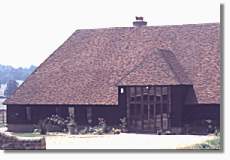
permitted development listed buildingsPermitted development rights for a prescribed range of developments may be also be withdrawn by the local authority under an Article 4 direction which is installed as part of a Planning Condition for example. This enables the local authority Planning Dept. to control certain types of alteration which could do damage to the character of conservation areas, such as the alteration or removal of doors and windows or other fenestration's in particular.

The policies of the local authority should be carefully noted as local authorities are required to pay special attention to 'the desirability of preserving or enhancing the character or appearance of that area' when considering an application for planning permission.

No person shall execute or cause to be executed any works for the demolition of a listed building or for its alteration or extension in any manner which would affect its character as a building of special architectural or historic interest, unless the works are authorised. There is often much debate on what works would actually affect its character or setting but suffice to say that the Planners & their Historic Buildings Officer will jump on practically any works for the applicant to submit an application for approval to the local council.

Download a pdf guide for listed building appeals...


View the new booklet "How to complete your listed building or conservation area consent appeal form" in (PDF) 116kb

View the new booklet "How to complete your listed building or conservation area enforcement appeal form" in (PDF) 936kb

 Planning (Listed Buildings and Conservation Areas) Act 1990, Section 7

Planning (Listed Buildings and Conservation Areas) (Scotland) Act 1997, Section 6

Listed building consent is required for all alterations to listed buildings and their interiors irrespective of their grade or category of listing. It is also required for alterations to any object or structure which lies within the grounds or 'curtilage' of a listed building and which was constructed before 1 July 1948. This will also include garden walls, sundials, dovecotes and other such objects and structures as well as buildings which are ancillary to the principal building, not separated from it, and were so at the time of listing.

It is important to note that altering a listed building without consent is a criminal offence but if the works were in genuine error and the owner is willing to reinstate them or applies retrospectively for permission which is then granted, them criminal prosecutions are rarely the result.

Bookmark this page
Google BookmarksYahoo My WebFacebook

 How to use this web site
 Certificate of Lawful Development Appeal List of Appeal Sites
 Appeal Decision 1
 Appeal Decision 2
 Appeal Decision 3
 Appeal Decision 4
 Appeal Decision 5
 Appeal Decision 6
 Appeal Decision 7
 Appeal Decision 8
 Appeal Decision 9
 Appeal Decision 10
 Appeal Decision 10A
 Appeal Decision 11
 Appeal Decision 12
 Appeal Decision 13
 Appeal Decision 14
 Appeal Decision 15
 Appeal Decision 16
 Appeal Decision 17
 Appeal Decision 18
 Appeal Decision 19
 Appeal Decision 20
 Appeal Decision 21
 Appeal Decision 22
 Appeal Decision 23
 Appeal Decision 24
 Appeal Decision 25
 Appeal Decision 26
 Appeal Decision 27
 Appeal Decision 28
 Appeal Decision 29
 Appeal Decision 30
 Appeal Decision 31
 Appeal Decision 32
 Appeal Decision 33
 Appeal Decision 34
 Appeal Decision 35
 Appeal Decision 36
 Appeal Decision 37
 Appeal Decision 38
 Appeal Decision 39
 Appeal Decision 40
 Appeal Decision 41
 Appeal Decision 42
 Appeal Decision 43
 Appeal Decision 44
 Appeal Decision 45
 Appeal Decision 46
 Appeal Decision 47
 Appeal Decision 48
 Appeal Decision 49
 Appeal Decision 50
 Appeal Decision 51
 Appeal Decision 52
 Appeal Decision 53
 Appeal Decision 54
 Appeal Decision 55
 Appeal Decision 56
 Appeal Decision 57
 Appeal Decision 58
 Appeal Decision 59
 Appeal Decision 60
 Appeal Decision 61
 Appeal Decision 62
 Appeal Decision 63
 Appeal Decision 64
 Appeal Decision 65
 Appeal Decision 66
 Appeal Decision 67
 Appeal Decision 68
 Appeal Decision 69
 Appeal Decision 70
 Appeal Decision 71
 Appeal Decision 72
 Appeal Decision 73
 Appeal Decision 74
 Appeal Decision 75
 Appeal Decision 76
 Appeal Decision 77
 Appeal Decision 78
 Appeal Decision 79
 Appeal Decision 80
 Appeal Decision 81
 Appeal Decision 82
 Appeal Decision 83
 Appeal Decision 84
 Appeal Decision 85
 Appeal Decision 86
 Appeal Decision 87
 Appeal Decision 88
 Appeal Decision 89
 Appeal Decision 90
 Appeal Decision 91
 Appeal Decision 92
 Appeal Decision 93
 Appeal Decision 94
 Appeal Decision 95
 Appeal Decision 96
 Appeal Decision 97
 Appeal Decision 98
 Principal elevation
 Development within the curtliage of a dwelling house
 Basements
 Conditions
 Highest part of the roof
 A side elevation
 Applications received prior to 01-1-2008 yet determined on or after 01-10-2008
 Applications received on or after 01-10-2008 for works that were begun prior to 01-10-2008
 Other
 Class A development
 Class B development
 Class C development
 Class D development
 Class E development
 Class F development
 Class G development
 Class H development
 Incidental Use Appeal Decisions
 Use of a property
 Class A to H Permitted Development explained
 Article 4 Directions Removal of PD Rights
 Garden Buildings without Planning Permission
 History of Planning in the UK
 Detached garden buildings and enclosures under permitted development rules
 Micro generation permitted development
 Permitted development listed buildings
 Permitted Development Flats
 Permitted Development Demolition
 Permitted Development Agricultural Buildings
 Permitted Development Solar Panels
 Renewable Energy Permitted Development
 Permitted Development Consultation
 Permitted Development Conservation Areas
 Permitted Development Loft Conversions
 Permitted Development Extensions
 Permitted Development Legislation
 Householder Permitted Development
 Permitted Development Scotland
 Telecommunications Permitted Development
 Agricultural Permitted Development
 Permitted Development Limits
 Permitted Development Outbuildings
 What can stop permitted development
 Products
 Web Sites
 Services
 Council locator
 News
 What is comming in PD Legislation
 Government spin on the new Permitted Development
 Royal Town Planning Institutes opinion
 The Planning Service agricultural buildings
 Architecture and design Service
 Communities and Local Government
 Planning Application Fees
 PD Diagram Part 1 Classes A and D
 PD Diagram Part 1 Classes B and C
 PD Diagram Part 1 Class E
 PD Diagram Part 1 Class F
 PD Diagram Part 1 Class G
 PD Diagram Part 1 Class H
 Download Building Regulations Approved Documents
 Download The Party Wall Act Document
 Download the latest PD legal document
 Download the old PD legal document
 Download a farmers guide to the planning system
 Download a guide to permeable surfaces
 Download statutory instruments